

2026 Toyota Mirai: Green Brook Buyers Guide
Quick Answer: The 2026 Toyota Mirai at a Glance
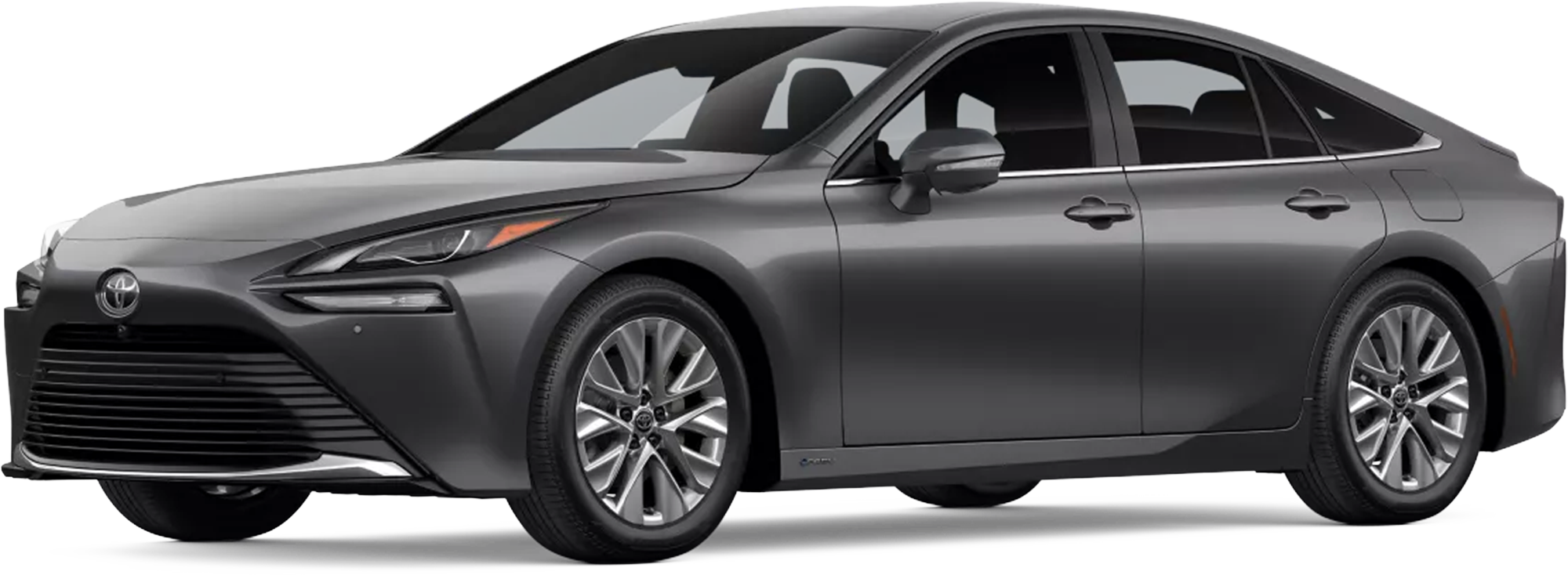
The 2026 Toyota Mirai is a hydrogen fuel cell sedan sold in a single trim, XLE, at $51,795 MSRP plus a $1,195 destination fee — a fuel-cell stack and electric motor combination, not a plug-in EV, good for an EPA-estimated 402 miles per hydrogen fill-up. Before anything else, here's the honest local fact: there is no public hydrogen fueling station anywhere in New Jersey, New York, or Connecticut today, and Toyota's own retail programs concentrate new Mirai sales in California, where the refueling network actually exists. Empire Toyota of Green Brook on Route 22 West can walk you through the Mirai as a technology and a buyer's-guide topic, but for a car you can fuel and drive every day in central Jersey, this page also points toward the Toyota hybrids and the all-electric bZ that this store sells and services routinely.
What the Mirai actually is
Say "hydrogen car" to most people and they picture something experimental. The Mirai is the opposite — it's been in production since 2014 and the 2026 model is a mature, well-equipped sedan built on Toyota's GA-L platform, the same architecture underneath the Lexus LS. Under the hood there's no engine and no charge port. Instead, hydrogen stored in two tanks under the rear seat combines with oxygen pulled from the air inside a fuel cell stack, generating electricity on the spot to spin a 182-horsepower motor at the rear wheels. A small buffer battery smooths out the power delivery, the same way a hybrid's battery does. The result drives like an EV — quiet, instant torque, no gears to shift — and refuels like a gas car, in roughly five minutes at a station equipped for it. That "roughly five minutes" is the whole appeal of hydrogen over battery power, and it's also exactly why the next section matters more than any spec on this page.
The fact this page leads with, on purpose
We're not going to bury this in a footnote. As of today, retail hydrogen fueling in the United States is concentrated almost entirely in California, with a handful of stations elsewhere and effectively none serving New Jersey, New York, or the wider Northeast. There are hydrogen infrastructure projects on the drawing board for the region — port and trucking pilots, planning studies for the I-95 corridor — but none of that is a public station a Mirai owner in Green Brook, Dunellen, or anywhere in Middlesex or Somerset County could pull into this week. Toyota knows this too, which is why its own sales and lease tools are effectively gated toward California zip codes. Buying a new Mirai through an East Coast Toyota store like this one, today, is not a realistic path to a car you can drive and fuel here — and we'd rather tell you that plainly than let you find out after a purchase.
None of that makes the Mirai uninteresting. It's a genuinely well-built showcase of where zero-emission propulsion is headed, and understanding it helps make sense of the rest of Toyota's electrified lineup. It's also why this guide reads more like an explainer than a sales pitch — and why every page in this set ends by pointing you toward Toyota models this dealership can put in your driveway on delivery day.
The one trim: XLE
Mirai XLE
from $51,795 MSRP
The only 2026 Mirai — 12.3-inch touchscreen and digital cluster, JBL audio, heated SofTex seats, Toyota Safety Sense 3.0, and a 402-mile EPA range, all standard.
Older Mirais offered a second Limited trim; that's gone for 2026. Every 2026 Mirai is an XLE, which simplifies shopping considerably — the only real decisions left are exterior color and whether the numbers make sense for how you'd actually use the car.
What's new for 2026
Toyota kept this a light-touch model year. The headline change is a new standard 19-inch black machine-finished alloy wheel design; underneath, the fuel cell system, motor output, and 402-mile range carry over unchanged from 2025, and pricing didn't move either. Toyota Safety Sense 3.0 continues as the safety suite. If you drove or researched a 2025 Mirai, the 2026 is functionally the same car with new wheels.
What people actually ask about hydrogen cars
Two questions come up constantly once people get past the styling: is this really electric, and how much does it cost to run? On the first, yes and no — the Mirai's wheels are turned entirely by an electric motor, so it drives like an EV, but it makes its own electricity onboard from hydrogen rather than storing it in a plug-in battery, which is the core difference from Toyota's bZ. On the second, Toyota includes up to $15,000 in complimentary hydrogen with a new Mirai (valid six years for a purchase, three years for a lease), which matters because retail hydrogen where it's sold commonly runs well into the teens or higher per kilogram — expensive enough that the complimentary fuel program is less a bonus than a load-bearing part of Mirai ownership economics.
What buyers say about this store
Empire Toyota of Green Brook carries a 4.69-star rating across more than 2,400 Google reviews, and while the Mirai is far too low-volume a car for model-specific feedback to exist locally, the same sales and service teams handling every Toyota on this lot show up in review after review. Sabita S. described her advisor as someone who "kept me informed, was always on point, and made the whole process smooth and stress free," and Daniel G. singled out the service department for explaining things "thoroughly," leaving "no room for you to assume." That's the team you'd be working with on a Mirai conversation too — informed, not pushy, and comfortable saying "here's what makes sense for you" even when that answer isn't the car you walked in asking about.
If not a Mirai, then what?
This is the useful part of the conversation. Empire Toyota of Green Brook actively stocks and leases several electrified Toyotas built for exactly the daily-driving reality a Mirai can't yet serve here: the bZ, Toyota's plug-in battery-electric SUV, which charges at home or at any public EV charger rather than a hydrogen pump; the RAV4 Hybrid and Prius, which need no plug or hydrogen tank at all and simply sip regular gasoline at 50 mpg-plus; and the Camry Hybrid, a sedan built on the same efficiency logic as the Mirai without any of the fueling uncertainty. Any of the sales team on Route 22 can put you in one of these the same day. The pricing & leasing guide and service & repair guide in this set stay focused on the Mirai itself for shoppers doing serious research, tracking a future move to California, or simply curious how the technology works.
Frequently asked questions
Will there be a 2026 Toyota Mirai?
Yes — Toyota continues the Mirai for 2026 in a single XLE trim, with new standard wheels as the only meaningful change from 2025. It remains a low-volume, specialty model rather than a mainstream sales priority.
How many miles per gallon does a 2026 Toyota Mirai get?
The EPA rates it at 74 mpg-equivalent city, 70 highway, and 72 combined, for an estimated 402-mile driving range on a full hydrogen fill. Those are MPGe figures, a hydrogen-to-gasoline energy comparison, not literal miles per gallon — the Mirai burns no gasoline at all.
Do all Toyota Mirai models run on hydrogen?
Yes. Every Mirai, in every model year it's been built, is a hydrogen fuel cell vehicle — there's no gas, hybrid, or plug-in version of this nameplate. If you want a plug-in Toyota, that's the bZ; if you want gas-free without a plug, that's the Prius or a RAV4 Hybrid.
Why are people getting rid of their Toyota Mirai?
The two honest, well-documented reasons are the thin public refueling network — stations exist mainly in California, and even there they can be inconsistent — and steep resale depreciation, since used-Mirai buyers face the same fueling limits new buyers do. Neither is a mechanical flaw in the car; both come down to hydrogen infrastructure simply not being built out yet, especially outside California.
How expensive is it to refill a hydrogen car?
Retail hydrogen commonly costs well into the teens per kilogram or more where it's sold, which is why Toyota bundles up to $15,000 of complimentary hydrogen with a new Mirai (six years for purchases, three for leases). Outside that window, or without it, hydrogen fuel is genuinely expensive per mile compared with gasoline or home EV charging.
Can I buy a new 2026 Mirai at Empire Toyota of Green Brook?
We can discuss the car, its specs, and how ownership actually works, but Toyota's own retail programs currently steer new Mirai sales and leases toward California, where the fueling network exists. For a Toyota you can fuel and drive daily from this store, ask about the bZ, RAV4 Hybrid, Prius, or Camry Hybrid.
One more honest note
A lot of automotive content exists to talk you into a car. This set exists to explain one honestly, including the part that makes it a poor fit for New Jersey today. If the technology still interests you — for a future move, for the engineering, or just out of curiosity — the XLE trim guide, service guide, and pricing guide go deep on the details. If you came here looking for a Toyota to actually drive this month, the rest of the lot is ready when you are.
MSRP figures exclude the $1,195 destination fee plus tax, title, registration, doc, and dealer-installed options; the dealer sets the actual selling price. Fuel-economy and range figures are EPA estimates; your results will vary with conditions and driving style. Hydrogen refueling station availability is subject to change and should be independently verified before any purchase decision. Complimentary hydrogen and other manufacturer incentives are time- and mileage-limited per Toyota Motor Sales, U.S.A. and subject to change. Customer quotes are excerpts from public Google reviews of Empire Toyota of Green Brook describing their general sales or service experience, not the Mirai specifically.